


Skip to contentStart your project

A Sanity agency for the way you publish.

We design content models, build custom Sanity editing tools and connect them to your website or app. Your team gets a publishing workflow shaped around its content.

Selected website: Ficus Health
  • Content your team can manage
  • Connected to your website
  • Training & ongoing support

What we build in Sanity

This site runs on Sanity. The same architecture rigour goes into every client project.

Sanity

Write it once. Use it where it belongs.

Structured content connects your stories, people and pages without copying everything.

Illustrative Sanity service example

Custom Sanity Studio

Studio configured for your editorial team — custom schemas, field groups, document actions, and desk structure that makes content management intuitive.

Content modelling

Schema design for complex content — portable text, nested references, image metadata, localisation fields, and document relationships built correctly.

GROQ queries & API setup

GROQ queries written to serve exactly what each page needs — typed, tested, and optimised for Sanity's CDN.

Programmatic SEO architecture

Sanity as the data source for hundreds of pages at build time — city pages, category pages, product variants. Structured once, scaled without rebuilding.

Multi-channel content delivery

One content model serving website, app, newsletter, and other surfaces. Hilvy sets up the GROQ queries for each surface.

Content migration to Sanity

Moving from Webflow CMS, WordPress, or a custom database. Hilvy handles schema mapping, data transformation, and import.

A feel for our work.

A short look at the websites we design and build.
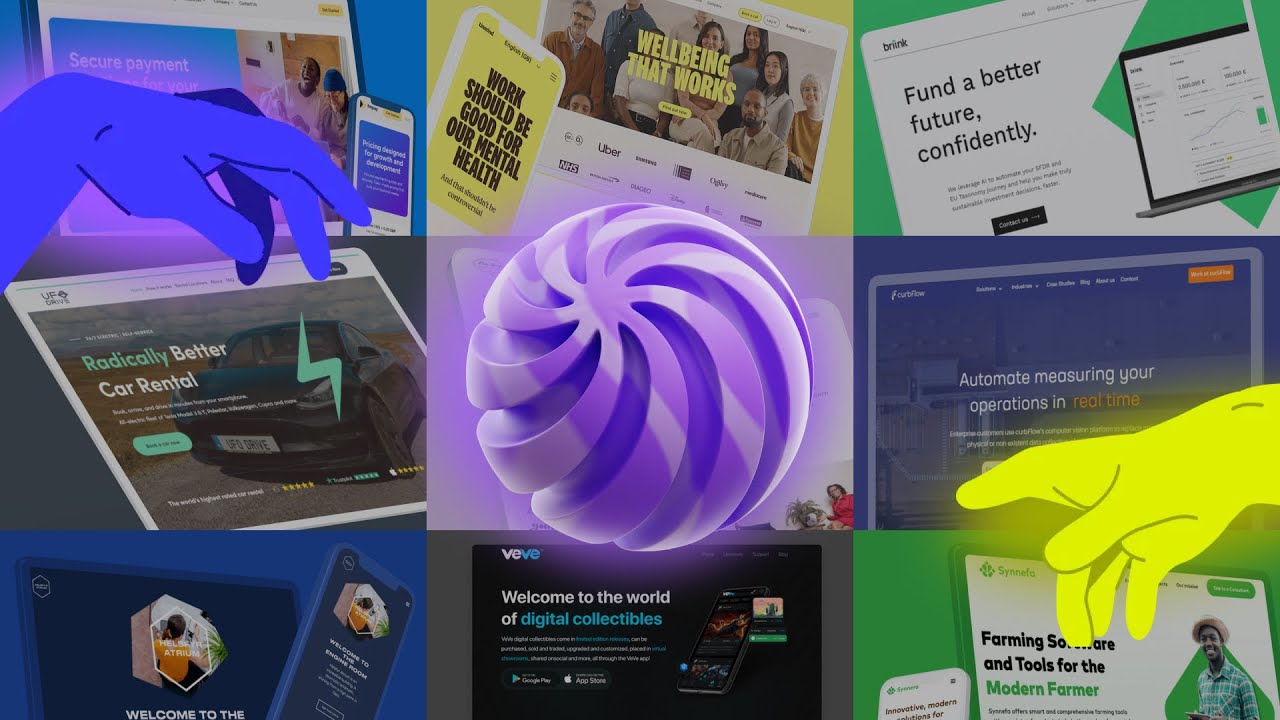
A look at the workWatch on YouTube

Common questions about Sanity

A headless CMS stores and manages content independently from the frontend. Instead of being tightly coupled to a specific website theme, it delivers content via API — any website, app, email, or digital surface can pull exactly what it needs. You write content once and it can appear anywhere. Sanity is one of the most flexible and developer-friendly headless CMS platforms available.

When the content model is more complex than Webflow handles well — multiple content types with relationships between them, content that needs to be shared across several frontends, a large editorial team that needs proper publishing workflows and preview environments, or a project where programmatic SEO means generating hundreds of pages from structured data. Webflow CMS is excellent for standard marketing sites. Sanity is the right choice when the content requirements scale beyond it.

Yes — this site runs on Sanity. The blog, testimonials, project portfolio, client data, and several other content types all come from Hilvy's own Sanity instance. We build on platforms we trust for our own infrastructure, which means client projects get the same architecture quality.

GROQ is Sanity's query language, purpose-built for querying document-based content. It's more expressive than REST and more ergonomic than GraphQL for this type of data — you can filter, project, dereference relationships, and sort in a single query. Hilvy writes typed, tested GROQ queries for every data fetch, optimised for Sanity's global CDN.

Yes. Sanity delivers content via its GROQ API to whatever frontend is consuming it — Webflow, Framer, Next.js, or any other surface. For Webflow specifically, Sanity content can be synced to Webflow CMS via Make or a custom script. Hilvy has built both patterns and will recommend the right integration approach for the project.

A focused Sanity Studio setup with a well-defined content model typically takes five to ten days — including schema design, Studio configuration, GROQ queries, and integration with the frontend. Content migrations from Webflow CMS, WordPress, or a custom database are scoped individually based on volume and complexity. Hilvy provides a clear timeline before any work starts.

Yes — Sanity Studio is designed to be configured for the editorial team, not just developers. Hilvy builds Studio schemas with editors in mind: clear field labels, sensible defaults, validation rules, and preview panels so editors can see how content will look before publishing. The goal is a CMS your team actually wants to use.
Derrick
Abdul
Bunmi
Farwa
Joshua
Nitin
Samuel

Your project is in the right hands

A wealth of experience across a range of disciplines — from front-end development and backend engineering to QA, strategy, and beyond.

7 specialists·50+ projects·5★ rated

Building on Sanity? Let's talk.

Book a call. We'll tell you whether Sanity is the right choice and what the build involves.