A telecoms website often sits at the start of a conversation that finishes somewhere else. A visitor may compare business phone numbers, read about call analytics, submit a form or pick up the phone. The website needs to explain the offer clearly, then preserve enough context for the team handling the enquiry.
That was the shape of our work with Telecoms World, a business telephony provider. What began as ongoing Webflow maintenance became a Figma redesign, a complete Webflow rebuild and a call-tracking setup connected to CRM workflows. The project is a useful example of what a telecoms website redesign involves when the marketing site and the sales journey need to work together.
What makes a telecoms website rebuild different
Business telephony websites have a broad product surface. A provider may offer non-geographic numbers, business phone systems, call tracking and call analytics, with different pages for different use cases. The site must make those distinctions understandable without making every visitor learn the product catalogue before they can ask a question.
There is also a practical measurement problem. For a telecoms provider, a phone call can be as important as a submitted form. A page can attract useful traffic and still leave the sales team without a reliable record of which campaign or landing page prompted the conversation.
Start with the enquiry path, not just the homepage
A visual redesign is an opportunity to clarify the route from a search result to an enquiry. That route includes the information hierarchy, calls to action, forms, phone numbers and the content that helps someone decide whether to get in touch.
For Telecoms World, the redesign began in Figma and moved into a reusable Webflow structure. Product pages, campaign destinations and supporting content could share a consistent foundation, while the page copy still had room to answer the specific question that brought someone there.
This is the difference between a page that looks finished and a website that can support marketing work. The layout is part of the conversion path, but the content model and connected tools are part of it too.
Why Webflow was a practical fit
Webflow gave the Telecoms World team a manageable publishing system for the marketing site. The CMS could hold recurring product and editorial content, while reusable components kept the implementation consistent across a large page set.
The platform was not treated as the whole solution. The site also needed custom front-end scripts, form handling and a reliable route into the CRM. A useful Webflow agency partner needs to understand where native features are enough and where a connected implementation is needed.
Connecting call tracking to CRM data
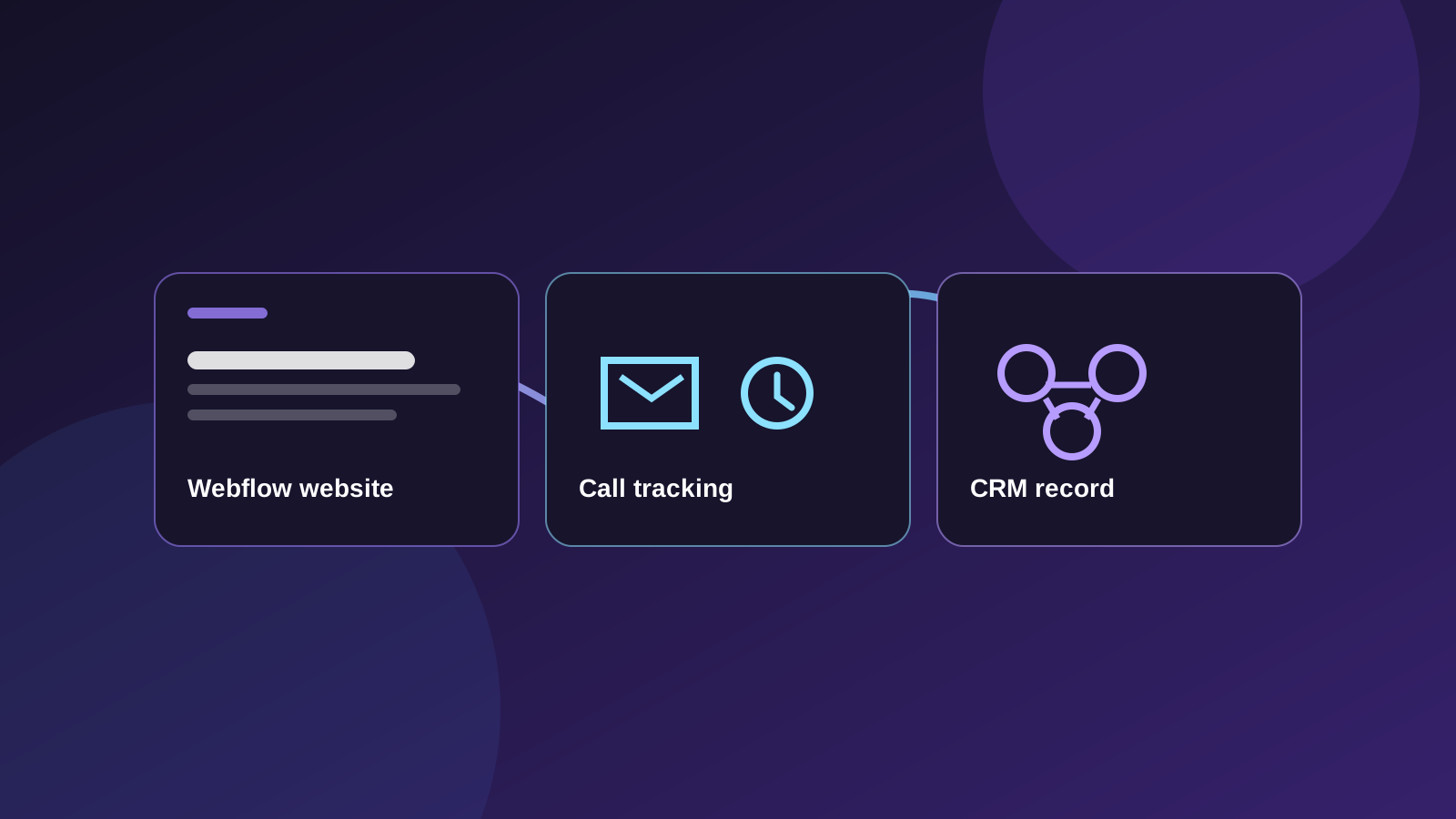
The central technical problem was connecting a phone enquiry to the marketing context that came before it. The tracking setup captures information such as UTM parameters, advertising source and session context, then carries structured lead information towards HubSpot.
That connection makes the website more useful to the team after someone leaves the page. Rather than seeing only that a call happened, the business can work with the information captured around the visit. The implementation does not replace good campaign measurement, but it closes an important gap between a landing page and a phone-based conversion.
The lesson is broader than this one project: decide what the sales team needs to know before choosing a form tool or analytics script. The data model should follow the enquiry process, not the other way around.
The role of scripts and integrations
Some of the most important work on a telecoms website is not visible in the hero section. Front-end scripts can manage dynamic phone numbers, preserve campaign parameters and coordinate the information sent to downstream systems. Cloudflare Workers and verification checks can add a controlled layer between the browser and an API.
Those pieces need to be treated as part of the website, not as a collection of snippets added after launch. Changes to a product page, form or tracking rule can affect the customer experience and the information the team receives. A documented integration and a careful release process reduce that risk.
Ongoing maintenance is part of the system
A large marketing website changes after the rebuild. New products need pages, campaigns need landing routes and tracking requirements evolve. A maintenance relationship gives the business a way to make those changes while keeping the CMS, front-end code and integrations aligned.
Our Webflow maintenance work with Telecoms World includes CMS refinement, layout fixes, script management and custom integrations. This is not a promise that a website never needs attention. It is a clear responsibility for the technical layer around the marketing team.
What to look for in a telecoms web design partner
When reviewing a telecoms website design or development partner, ask questions that cover the full route to an enquiry:
- How will the site explain different telecoms products to different buyers?
- Which content should be managed in the CMS, and who will maintain it?
- How will form and phone enquiries carry campaign context?
- Where will lead data be validated and routed into the CRM?
- Who owns the scripts and integrations after the redesign?
The answers should be specific to the business. A generic website package can produce a polished interface, but it may not address the operational work that follows a call or form submission.
A useful brief for the next phase
A good telecoms website brief includes the current site, the products that need clearer journeys, the campaigns that matter and the systems that receive enquiries. It should also identify the evidence available, such as existing pages, call-tracking requirements and the team responsible for publishing.
From there, the work can be phased. A design system and CMS structure can support the first set of pages, while the measurement and CRM connections are planned alongside the build. This keeps the project grounded in the customer journey rather than treating integrations as a final checklist.
See the full Telecoms World case study
The Telecoms World case study covers the project scope in more detail, including the Webflow rebuild, call tracking scripts, HubSpot connection and ongoing support. For related work, our website integrations service explains how forms, CRM workflows and custom APIs can sit alongside a clear marketing website.
The strongest telecoms website is not only a better brochure. It is a useful part of the enquiry system, with content, design and technical ownership working together. If your team needs that implementation capacity across campaigns and systems, our guide to the fractional marketing engineer role explores the wider model.