
A digital marketing retainer should make the ongoing work easier to understand. The fee buys an agreed capacity, service or programme, but the proposal needs to explain what happens each month, what is outside scope and how decisions are made.
For a business website, separate keeping the site dependable from improving content, visibility and conversion. Those activities can share a partner, but they need different expectations and evidence.
Ask which kind of retainer is being proposed
A maintenance arrangement may cover updates, checks and support for the existing setup. A growth programme may cover research, content, landing pages and measurement. A capacity retainer may reserve time for a prioritised backlog.
The label alone does not establish the deliverables. Ask whether the fee buys fixed outputs, a time allowance, service coverage or a combination. Clarify how unused capacity, urgent work and larger requests are handled.
Do not assume “marketing support” includes website development, paid-media spend, photography and every tool subscription. List them explicitly.
Define the monthly work in concrete terms
A useful scope could include a reviewed content plan, a specified set of website changes, relevant search analysis and a meeting to agree priorities. The exact outputs should reflect the business, not a generic list copied into every proposal.
For each activity, ask what you receive and how it is checked. “SEO optimisation” is broad. “Review these service pages, implement the agreed metadata and internal-link changes, then verify the published URLs” is inspectable.
Keep business inputs visible. An agency may need access, approved facts, product changes or subject-matter review. The schedule should say what happens when those inputs are unavailable.
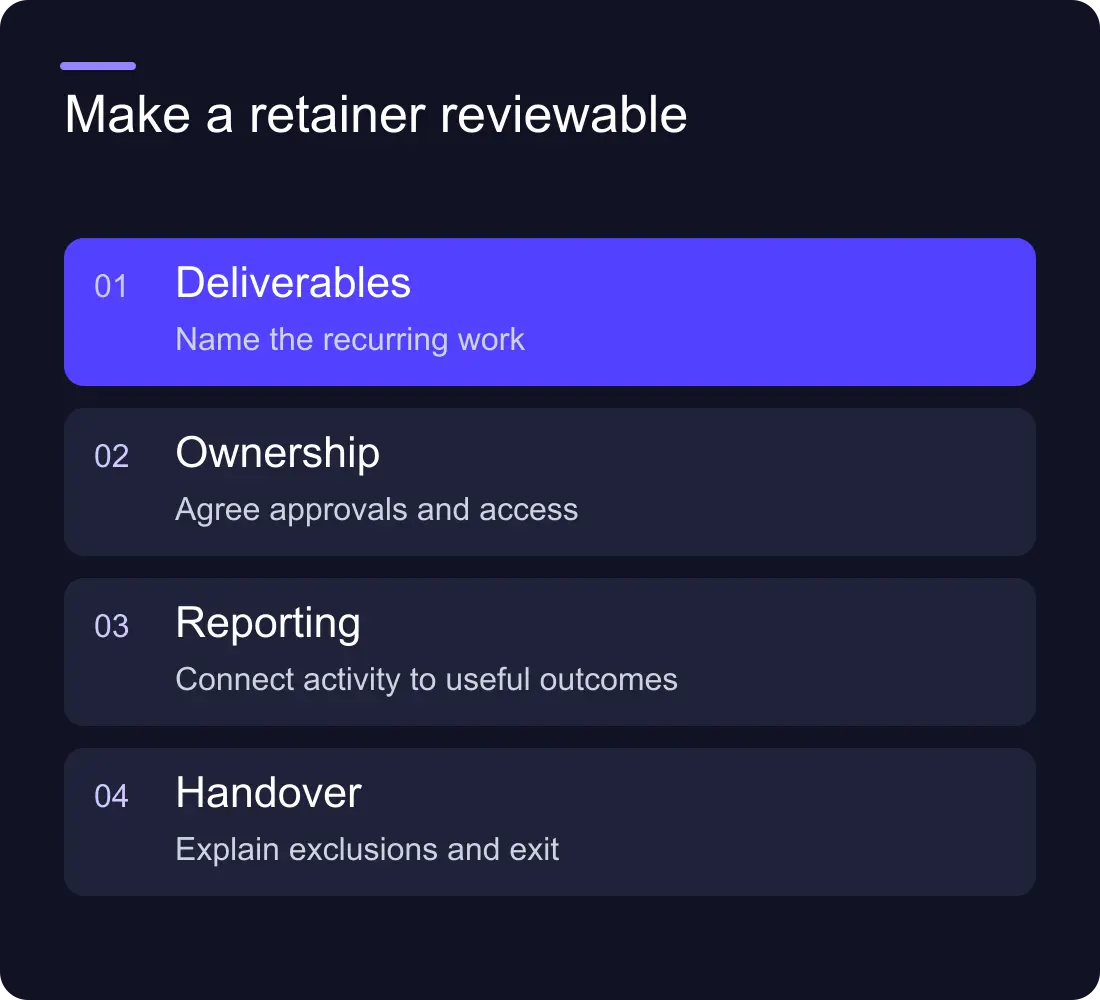
Distinguish reporting from delivery
A report should explain what changed, what the evidence shows and what the team will do next. A long dashboard can contain little useful judgement if it merely repeats numbers available in another tool.
Use meaningful measures. Traffic, search positions and enquiries have different roles. Explain tracking gaps and sample-size limits. Do not report a contact-page visit as a qualified opportunity unless that is the agreed definition and clearly labelled.
Ask for a change log linking work to pages or assets. It helps the business inspect the output and understand the release dates when reviewing performance later.
Agree prioritisation and approval
Keep one backlog with a responsible business owner. Rank tasks by the problem they solve, dependency and expected effort. A new homepage concept should not silently displace an urgent broken enquiry route.
Define who can approve publication, spending and third-party connections. A standing retainer can authorise routine work, but the boundaries should be understood by both teams.
Name the review rhythm. A short monthly planning meeting may be enough for a focused programme; a complex release needs its own checkpoints. Avoid meetings that consume the capacity intended for delivery without resolving decisions.
Read exclusions and operational promises
Check response expectations, working hours, incident handling and what counts as an emergency. “Priority support” should have an agreed meaning rather than implying continuous coverage by default.
Separate vendor costs and advertising budgets from the service fee. Clarify account ownership and billing so the business can see what it is paying the agency and what it is paying a platform.
For website care, understand the recovery boundaries. A code rollback may not restore edited CMS content or reverse a change in another system. Ask which actions are included and who controls the relevant accounts.
Review value against the actual programme
Inspect completed work, quality, responsiveness and business relevance. Compare the agreed scope with the delivered backlog and explain any changes. Results such as organic growth need a realistic measurement period and context.
Be wary of guaranteed rankings or a fixed volume of “AI content” without a quality and evidence process. A useful article should answer a real question and support the site, not exist solely to reach a monthly word count.
At renewal, ask which work should continue, change or stop. Keep the programme tied to current business needs rather than maintaining the same package indefinitely.
Should a retainer guarantee a certain number of leads?
Ask how leads are defined, measured and influenced by the scope. Delivery commitments can be specific; business outcomes depend on factors beyond the monthly work. Treat unsupported guarantees cautiously.
What should happen when we end the retainer?
Agree account access, exports, documentation, outstanding work and a handover period. The business should understand how to continue operating the website and connected services.
Explore Hilvy's maintenance, SEO and conversion work, and website services, or read the B2B lead-generation guide.