A website redesign often starts with “we need a new look” and ends with questions about the company's name, audience and offer. That is why the brand refresh vs rebrand decision belongs before the first page design.
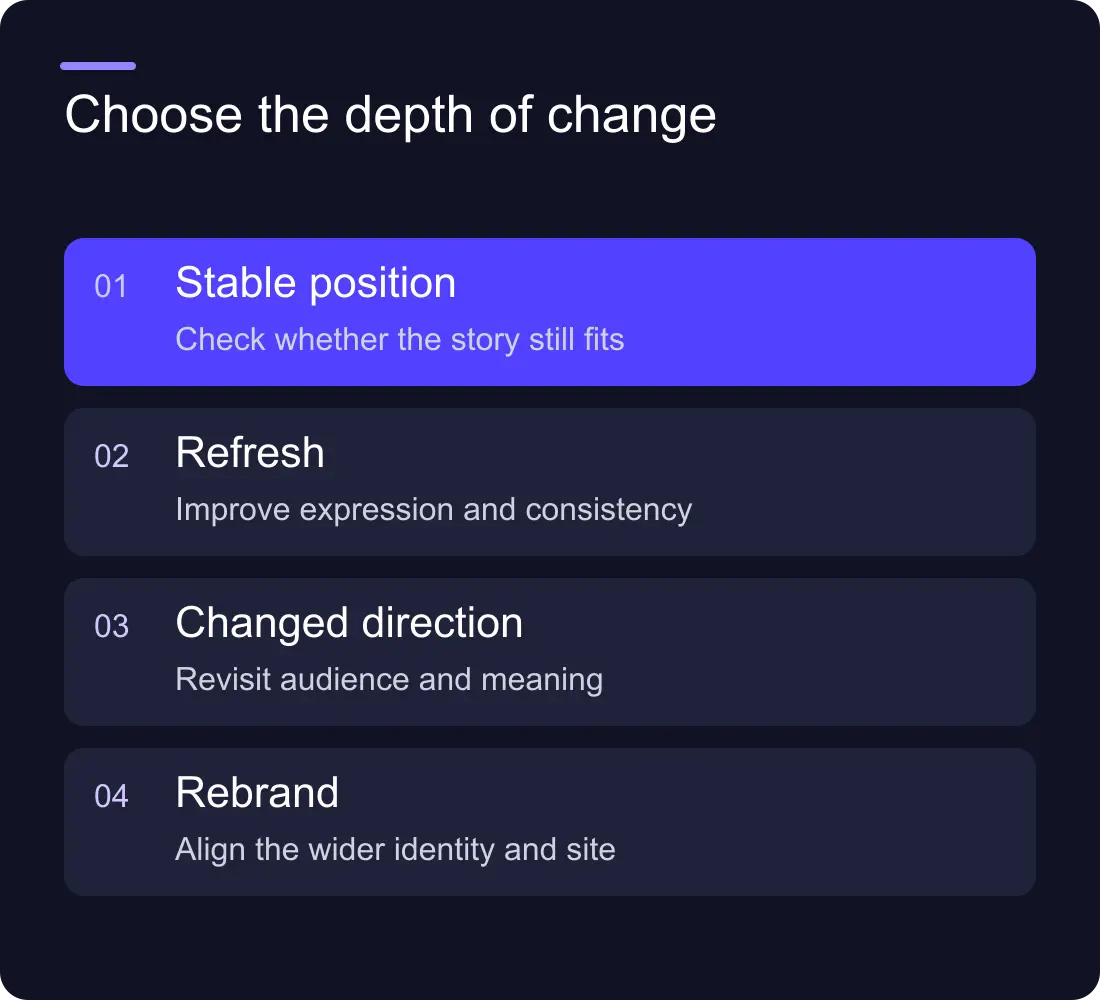
A refresh updates how an established brand appears or communicates while retaining its recognisable foundation. A rebrand changes more fundamental parts of the identity or positioning. The boundary varies by project, so define the actual decisions rather than relying on the label.
Diagnose the problem beneath the visual request
Ask why the current brand feels wrong. Is the website inconsistent? Has the company moved into a different market? Do prospects misunderstand the offer? Does the identity fail in small digital formats? These problems call for different work.
A dated website can make a sound brand look tired. Conversely, a polished redesign cannot resolve an unclear business proposition. Gather examples from sales conversations, current pages and customer feedback so the discussion does not rest entirely on personal taste.
Separate evidence from preference. “The sales team repeatedly explains our new service because the site omits it” is a useful observation. “The blue feels boring” may matter aesthetically, but it does not explain the commercial requirement.
Know when a refresh is enough
A refresh can suit a business whose name, audience and positioning still fit, but whose expression has become inconsistent or difficult to use. The scope might include typography, colour use, image direction, layout and a clearer verbal style.
Keep the elements customers recognise deliberately. Document which parts stay and why. This is more useful than changing the logo slightly and letting every channel interpret the rest differently.
For a website, a refresh can also create reusable rules: heading hierarchy, project-image treatment, form language and CMS component guidance. That helps the brand remain coherent as the team publishes new pages.
Know when the fundamentals need work
A rebrand may be appropriate when the business has changed audience, offer, ownership or positioning, or when the existing identity creates a serious mismatch. These are business decisions with visual consequences, not merely a request for a more fashionable logo.
Name the open questions before hiring a designer. Will the company name change? Are services being reorganised? Is the promise different? Who approves the positioning? If these remain unsettled, detailed website design is likely to be reworked.
| Situation | Scope to investigate |
|---|---|
| Good positioning, inconsistent website | Website system or brand refresh |
| Identity works poorly on digital channels | Practical identity refresh |
| New offer with unclear audience | Positioning and messaging work |
| Business name or core proposition changes | Rebrand and rollout planning |
| Attractive brand, difficult enquiry journey | Website strategy and experience |
Plan the website around the decision
Agree the brand inputs the website team needs: positioning, service descriptions, identity assets, tone and examples. A mood board is useful direction, but it is not a complete content or identity handover.
If a refresh is running alongside the build, set a point at which shared decisions become stable enough to implement. Keep later refinements distinct from changes that affect every page.
Preserve useful content and established URLs during the visual work. A new brand does not automatically require a new address for every service. If names or URLs do change, use a documented redesign SEO plan.
Budget for rollout, not just design files
List where the identity appears: website, sales materials, proposals, email, social profiles, product interfaces and other relevant channels. Assign owners and priority. A refreshed homepage alongside an old proposal template can make the business feel less consistent rather than more.
Ask what the deliverables include. You may need source files, export formats, usage guidance, templates and training. Clarify rights and access so the business can use the work after the project ends.
Include content review. If the positioning changes, the website copy needs more than a new heading font. Check service pages, case-study introductions, forms and transactional messages as part of the rollout.
Write a brief that allows the right recommendation
Describe the problem and evidence first, then give the preferred scale of change and constraints. A good partner should be able to explain why a refresh, rebrand or website-only project fits, with concrete outputs for each option.
Do not judge proposals solely by the number of concepts. Compare research, decision-making, usable identity rules, implementation and handover. The useful outcome is a brand the team can apply consistently.
Can we keep the logo and still refresh the brand?
Yes. Typography, layout, language, imagery and digital use can change substantially while the recognisable mark stays. Define what needs improvement rather than treating a new logo as the project by default.
Should the website agency also do the rebrand?
It can, if the team has the relevant strategy and identity capability and the scope is clear. Read the creative agency vs branding agency guide to compare the responsibilities.
Use the website brief template and brand identity vs visual identity guide before commissioning the build.